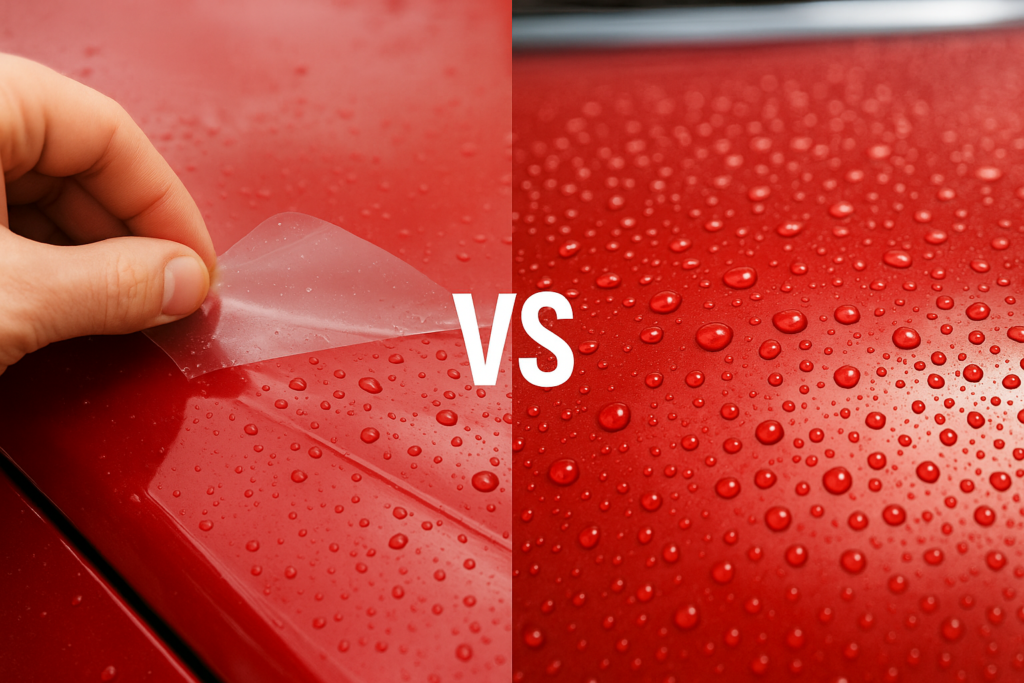

Choosing the right paint protection for your vehicle can save you thousands in future repairs and preserve its resale value. The debate of PPF vs ceramic coating confuses many car owners because both promise superior protection, yet they work in fundamentally different ways. Understanding which solution fits your needs, budget, and driving conditions will help you make a decision you won’t regret.
What Is Paint Protection Film (PPF)?
Paint Protection Film is a thick, transparent urethane material applied directly to your vehicle’s painted surfaces. Originally developed for military helicopters to protect rotor blades from debris, PPF has evolved into a premium automotive product. Modern films typically measure 6 to 8 mils thick and feature self-healing properties that allow minor scratches to disappear with heat exposure from sunlight or warm water.
PPF acts as a physical barrier. Rock chips, road debris, bug acids, and even light abrasions simply cannot reach your paint because the film absorbs the impact. Professional installers cut and shape the film to fit specific panels or wrap entire vehicles. Quality installations are nearly invisible, maintaining your car’s original finish while adding a protective layer that can last 5 to 10 years with proper care.
What Is Ceramic Coating?
Ceramic coating is a liquid polymer containing silicon dioxide or graphene that bonds chemically with your vehicle’s factory paint. Applied in thin layers, it cures to form a hard, hydrophobic surface that repels water and contaminants. The coating typically measures just 2 to 5 microns thick, far thinner than PPF.
This product changes how your paint interacts with the environment. Water beads up and rolls off. Dirt has difficulty adhering to the slick surface, making washing easier and less frequent. Ceramic coatings also provide UV protection that prevents oxidation and fading. Professional-grade coatings can last 2 to 5 years, while consumer products often need reapplication annually.
PPF vs Ceramic Coating: Protection Differences
The core distinction lies in what each product actually protects against. PPF excels at preventing physical damage. If you drive on highways frequently, park near construction zones, or live in areas with harsh winters and gravel roads, PPF shields your paint from chips and scratches that would otherwise require expensive touch-ups or panel repaints.
Ceramic coating focuses on chemical and environmental protection. It guards against water spots, bird droppings, tree sap, and UV degradation. The hydrophobic effect means contaminants slide off more easily. However, a ceramic coating will not stop a rock from chipping your paint. It’s simply not thick enough to absorb impacts.
Some vehicle owners combine both. They apply PPF to high-impact areas like the front bumper, hood, fenders, and mirror caps, then coat the entire vehicle with ceramic coating for easy maintenance and enhanced gloss. This layered approach offers comprehensive protection but comes at a premium price.
Cost Comparison and Value
Price varies dramatically based on quality, coverage area, and installer expertise. Full-front PPF installations typically range from $1,500 to $2,500, while complete vehicle wraps can exceed $6,000 to $8,000. Premium films with advanced self-healing technology and warranties push costs even higher.
Professional ceramic coatings cost between $600 and $2,000 for full-vehicle application, depending on the product brand and number of layers. DIY ceramic kits sell for $50 to $150 but require meticulous prep work and application skill. Poor DIY application often results in high spots, streaking, or inadequate bonding that undermines the coating’s effectiveness.
Consider cost per year of protection. A $5,000 PPF installation lasting 8 years costs roughly $625 annually. A $1,200 ceramic coating lasting 4 years runs about $300 per year. But remember: one rock chip repair costs $150 to $300. If PPF prevents just two chips per year, it pays for itself.
Maintenance Requirements
PPF requires minimal special care. Wash your vehicle normally using pH-neutral soap and microfiber towels or mitts. Avoid automatic car washes with harsh brushes that might lift edges. The self-healing properties activate with heat, so parking in sunlight occasionally helps minor scratches disappear. Most manufacturers recommend avoiding wax or sealants on PPF since the film already has a protective top coat.
Ceramic coatings demand more attention during the curing phase. You cannot get the vehicle wet for 7 to 14 days after application. Once cured, maintenance becomes straightforward but requires using pH-neutral shampoos specifically. Many ceramic coating manufacturers sell maintenance boosters or spray sealants that extend the coating’s life and enhance its hydrophobic properties.
Both products benefit from regular washing to remove contaminants before they bond to surfaces. Neither is truly maintenance-free, but ceramic coatings generally make washing faster since dirt doesn’t cling as stubbornly.
Which Should You Choose?
Your decision depends on specific priorities. Choose PPF if physical protection matters most. Daily highway commuters, drivers in construction-heavy areas, or owners of high-value vehicles benefit most from PPF’s impact resistance. The higher upfront cost makes sense when you factor in paint repair expenses and resale value protection.
Select ceramic coating if you prioritize appearance and easy maintenance over impact protection. Weekend drivers, garage-kept collector cars, or vehicles in milder climates without heavy road debris see excellent results from ceramic coatings. The shine enhancement and water-beading effect also appeal to enthusiasts who enjoy a showroom look.
Budget-conscious buyers might apply PPF only to the most vulnerable areas and skip full coverage. Protecting just the front bumper, hood leading edge, and rocker panels costs $800 to $1,200 but prevents the majority of stone chips. Pair this targeted PPF with a ceramic coating for a balanced approach under $2,000 total.
| Feature | PPF | Ceramic Coating |
|---|---|---|
| Thickness | 6-8 mils | 2-5 microns |
| Primary Protection | Physical impact, scratches, chips | Chemical, UV, water spots |
| Typical Lifespan | 5-10 years | 2-5 years |
| Full Vehicle Cost | $6,000-$8,000 | $600-$2,000 |
| Self-Healing | Yes (minor scratches) | No |
| Installation Time | 2-3 days | 1-2 days (plus cure time) |
FAQ
Can you apply ceramic coating over PPF?
Yes, ceramic coating adheres well to PPF and enhances its hydrophobic properties while making maintenance easier. Many professionals recommend this combination for maximum protection and ease of cleaning. Just ensure the PPF has cured fully before applying ceramic coating, typically waiting at least 30 days after installation.
Does PPF or ceramic coating prevent swirl marks?
PPF offers better protection against swirl marks because its thickness absorbs light abrasion from improper washing techniques. Ceramic coating does not prevent swirls but its slick surface reduces friction during washing, making swirls less likely if you use proper techniques. Neither product eliminates damage from aggressive scrubbing with dirty towels.
Which option is better for resale value?
PPF typically adds more resale value because it preserves the original paint in near-perfect condition. Buyers can see and appreciate paint free of chips and scratches. Ceramic coating helps maintain appearance but doesn’t prevent the physical damage that most concerns used car buyers inspecting a vehicle.
How long does PPF vs ceramic coating take to install?
Full PPF installation requires 2 to 3 days for proper surface prep, cutting, application, and curing. Ceramic coating takes 1 to 2 days for prep and application, followed by a 7 to 14 day cure period before water exposure. Partial PPF coverage can sometimes be completed in one full day.