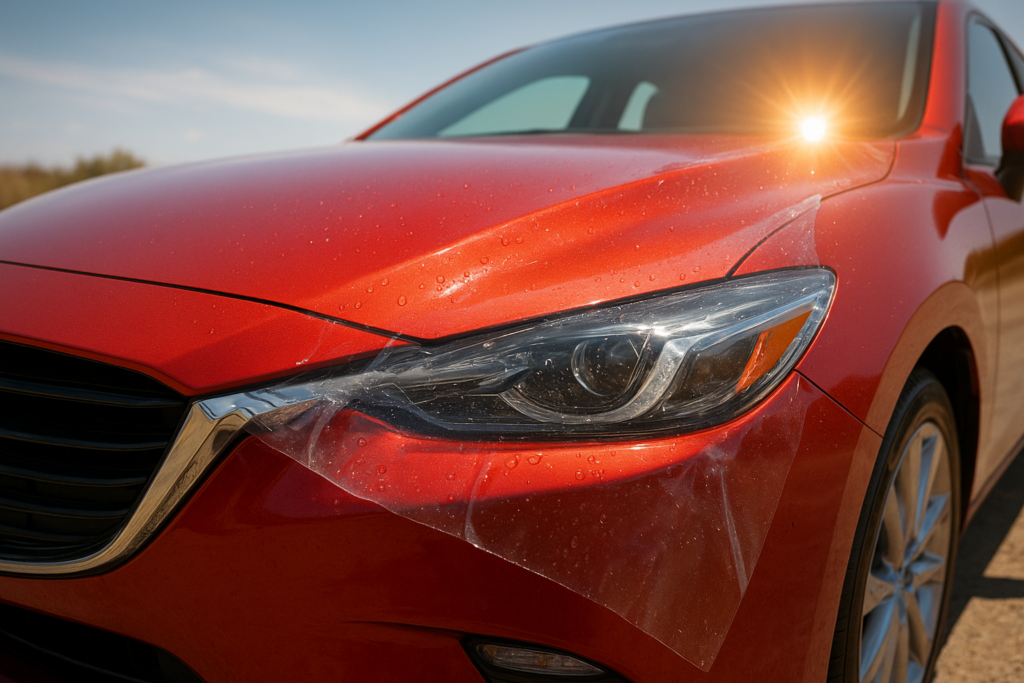

Texas heat is relentless. For vehicle owners who’ve invested in paint protection film, one of the most pressing questions is: how long does PPF last when exposed to intense UV rays, triple-digit temperatures, and the harsh climate conditions common across the Lone Star State? At Shield By Design, we help drivers understand what to expect from their PPF investment and how to maximize its lifespan in one of the country’s most demanding environments.
Understanding PPF Lifespan Under Normal Conditions
Paint protection film is engineered to withstand environmental stress. Under typical conditions in moderate climates, quality PPF products generally last between 5 and 10 years. The wide range depends on several factors: the film’s quality, installation precision, maintenance habits, and crucially, environmental exposure.
Premium films used by Shield By Design incorporate self-healing technology, UV inhibitors, and advanced adhesive systems designed to maintain their protective properties over years of service. These features aren’t just marketing buzzwords. They directly influence how well the film performs when your vehicle faces Texas summers that regularly exceed 100°F.
How Texas Heat Affects Paint Protection Film Durability
Texas presents unique challenges for automotive protection products. The state’s climate combines high temperatures, intense solar radiation, low humidity in some regions, and sudden weather changes. Each of these factors influences how long PPF maintains its protective and aesthetic qualities.
Heat accelerates chemical processes. When PPF is repeatedly exposed to extreme temperatures, the polymer structure can begin to break down faster than it would in cooler climates. Surface temperatures on dark-colored vehicles parked in direct sunlight can reach 170°F or higher. That’s significantly hotter than the ambient air temperature and represents serious stress on any protective coating.
UV radiation is particularly aggressive in Texas. With more sunny days than most states and a southern latitude that means more direct solar exposure, UV degradation becomes a primary concern. Quality films include UV stabilizers specifically to combat this, but no material is completely immune to years of constant bombarding by ultraviolet light.
The Self-Healing Feature Under Extreme Heat
One of PPF’s most valued features is its self-healing capability. Minor scratches and swirl marks disappear when the film’s top coat flows back together, typically activated by heat. Texas temperatures actually benefit this feature in the short term. Light scratches often heal faster when the film warms in the sun.
However, sustained extreme heat can eventually reduce the effectiveness of the self-healing layer. The repeated expansion and contraction cycles as your vehicle heats and cools can fatigue the material over time.
Expected PPF Lifespan in Texas Climate Conditions
So what’s realistic for Texas vehicle owners? Professional-grade PPF installed by experts at Shield By Design typically maintains excellent protective performance for 5 to 7 years in Texas heat. With proper care and garage storage, some installations push toward the 8 to 10-year mark.
The upper range requires dedication. Vehicles that spend most of their time garaged, receive regular maintenance, and avoid excessive sun exposure during peak afternoon hours will naturally see their PPF last longer. Conversely, work trucks that sit in construction site parking lots all day or vehicles without covered parking will experience faster degradation.
It’s worth noting that “lasting” doesn’t mean sudden failure. PPF degrades gradually. You might notice yellowing edges, reduced self-healing response, or decreased hydrophobic properties before the film actually fails in its primary protective function. Many Texas vehicle owners choose to replace their PPF around the 6-year mark not because it’s failed, but because they want to maintain that like-new appearance and maximum protection level.
Factors That Extend or Reduce How Long PPF Lasts
Several variables within your control significantly impact your film’s service life.
Installation Quality
Professional installation makes an enormous difference. Properly prepared surfaces, correct film tension, and expert edge sealing prevent premature lifting, contamination, and adhesive failure. Shield By Design’s certified technicians understand how Texas heat affects installation timing and curing, adjusting techniques accordingly.
Maintenance Practices
Regular washing removes contaminants that can etch or stain the film. Texas roads means dust, pollen, bug residue, and occasional industrial fallout. These contaminants become more aggressive when baked onto the film surface by intense heat. A consistent wash schedule prevents long-term damage.
Using pH-neutral soaps and avoiding automatic car washes with harsh brushes preserves the film’s top coat. Hand washing or touchless washes are ideal for PPF-protected vehicles.
Storage Environment
Garage parking provides the single biggest lifespan extension for PPF in Texas. Keeping your vehicle out of direct midday sun reduces cumulative UV exposure and heat cycling. Even a carport provides meaningful protection compared to open parking.
Vehicle Color and Surface Temperature
Dark-colored vehicles absorb more heat. Black, navy, and dark gray cars develop significantly higher surface temperatures than white or silver vehicles. This means PPF on darker vehicles experiences more thermal stress throughout its service life.
Signs Your PPF May Need Replacement
Knowing when to consider replacement helps you maintain continuous protection. Watch for these indicators:
- Yellowing or discoloration, particularly along edges or seams
- Lifting or peeling, especially after the 5-year mark
- Reduced water beading and hydrophobic performance
- Visible hazing or cloudiness that doesn’t clear with cleaning
- Permanent scratches that no longer self-heal
- Cracking or crazing in the film surface
If you notice these issues, contact Shield By Design for an evaluation. Sometimes what appears to be film failure is actually surface contamination that can be professionally corrected.
Maximizing Your PPF Investment in Texas
Getting the longest possible service life from your paint protection film requires partnership between quality installation and ongoing care. Shield By Design uses premium films specifically selected for their performance in harsh climates. These products incorporate the most advanced UV inhibitors and thermal stability available.
Consider applying ceramic coating over your PPF. This additional layer provides enhanced UV protection, makes cleaning easier, and can extend the film’s aesthetic lifespan by an additional year or more. The hydrophobic properties of ceramic coating also mean less time scrubbing bug residue and road grime, which reduces physical wear on the film.
Schedule periodic inspections. An annual evaluation by Shield By Design’s team can catch minor edge lifting or developing issues before they become serious problems. Early intervention often prevents minor concerns from shortening your film’s total lifespan.
Texas heat is tough on everything, but quality paint protection film remains one of the most effective ways to preserve your vehicle’s finish. Understanding realistic expectations for how long PPF lasts in our climate helps you make informed decisions about installation, maintenance, and eventual replacement. Shield By Design stands behind every installation with expert guidance tailored to Texas conditions, ensuring you get maximum value and protection from your investment.
FAQ
How long does PPF last on cars in Texas?
Professional-grade PPF typically lasts 5 to 7 years on vehicles regularly exposed to Texas heat and sun. With garage storage and excellent maintenance, some installations remain effective for 8 to 10 years. Vehicles without covered parking or those in constant sun exposure may see degradation closer to the 5-year mark.
Does Texas heat damage paint protection film faster than in other states?
Yes, extreme heat and intense UV exposure accelerate PPF aging compared to moderate climates. However, quality films are engineered with UV stabilizers and thermal resistance specifically to handle these conditions. Proper installation and maintenance offset much of the additional stress from Texas weather.
Can I extend the life of PPF on my car in hot climates?
Absolutely. Parking in covered areas whenever possible, washing regularly to remove contaminants, avoiding harsh chemicals, and applying ceramic coating over the PPF can significantly extend its effective lifespan. Even partial shade during peak afternoon hours makes a measurable difference over several years.
Will PPF turn yellow in Texas sun?
Lower-quality films may yellow when exposed to constant UV radiation, but premium PPF products used by professionals like Shield By Design include advanced UV inhibitors that prevent yellowing for many years. Proper maintenance and reduced sun exposure help prevent any discoloration throughout the film’s service life.